EV Charger Installations
Melbourne's Western Suburbs

Professional EV Charger Installation
Are you looking for a qualified EV charger installer in Melbourne's Western Suburbs? Need a competitive quote or advice on choosing the right charger for your vehicle?
Western Suburbs Electrical provides professional EV charger installation services for homeowners across Melbourne's west. Whether you're purchasing your first electric vehicle or upgrading your existing charging setup, we can help you select and install the right solution for your needs.
Feel welcome to call for a free quote or advice. We've also answered some of the most common EV charging questions below.

Why Install a Home EV Charger?
Owning an electric vehicle is only half the equation.
Having a reliable, fast, and safe charging solution at home is what makes EV ownership truly convenient.
At Western Suburbs Electrical, we install dedicated home EV charging stations that deliver significantly faster charging speeds than a standard household power point.
A professionally installed 7kW Level 2 charger can typically add 30–40km of driving range per hour, allowing most EV owners to fully recharge their vehicle overnight.


The Benefits of Home EV Charging
Convenience
Simply plug in when you arrive home and let your vehicle charge while you sleep. No more waiting at public charging stations or planning your day around charging stops.
Lower Running Costs
Charging at home, particularly during off-peak electricity periods, is often considerably cheaper than using public fast-charging networks.
Improved Safety
Standard household power points are not designed for continuous high-load EV charging. A dedicated EV charging circuit, professionally installed to Australian Standards, helps protect against overloaded circuits, nuisance tripping, and unnecessary wear on electrical equipment.
Future-Proof Your Home
As electric vehicle ownership continues to grow across Melbourne, a professionally installed EV charger can become an attractive feature for future buyers and help prepare your home for the transition to electric transport.
Whether you drive a Tesla, BYD, MG, Hyundai, Kia, BMW, Audi, or another electric vehicle, Western Suburbs Electrical can recommend and install the right charging solution for your home.
Which EV Charger Is Right for You?
With so many EV chargers available on the market, choosing the right one can be confusing. The best option depends on your vehicle, charging requirements, and budget.
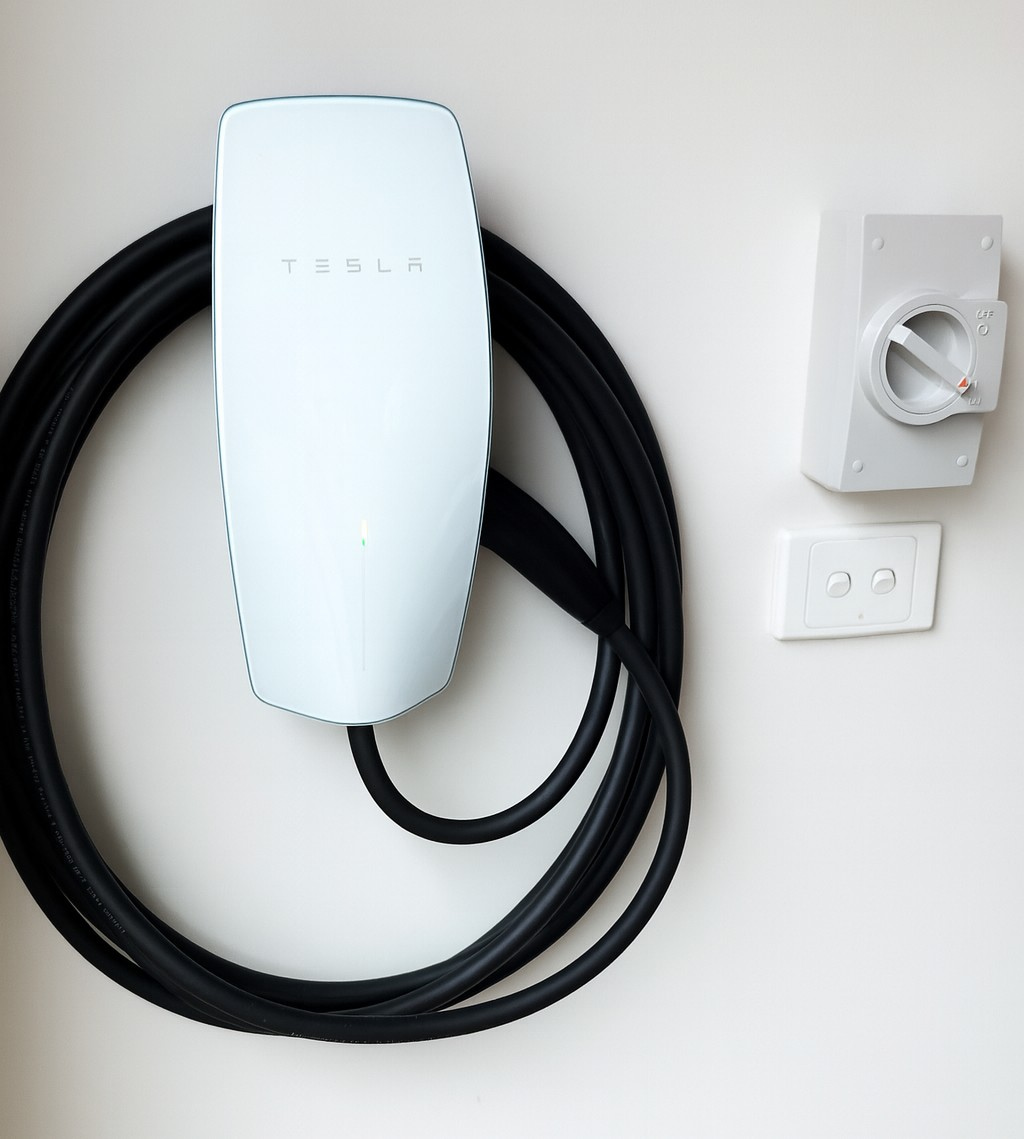
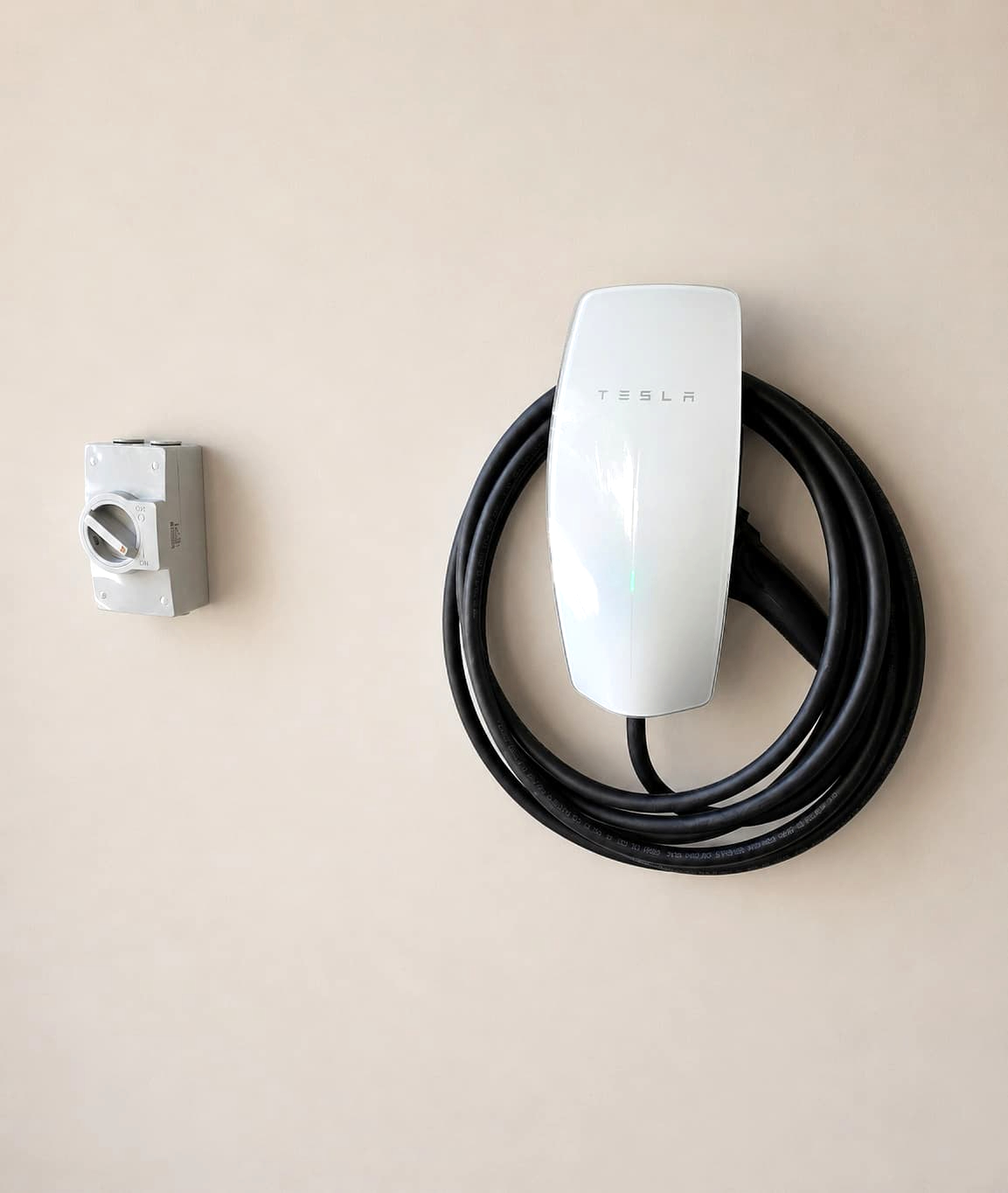
A popular choice for many EV owners is the Tesla Wall Connector Gen 3. It is compatible with most electric vehicles and features a generous 7.3m charging cable, compared to the 5m cable commonly supplied with many other chargers. This extra reach provides greater flexibility when parking and charging your vehicle.
The Tesla Gen 3 charger can typically be purchased for around $750–$800 from the Tesla store or selected retailers such as Bunnings. Alternatively, we can supply and install the charger for you.
No matter which brand you choose, we can professionally install your EV charger to ensure it is safe, compliant, and ready for use.


Charger Types: Which One Is Right for You?
Not all EV chargers are the same. Understanding the differences can help you choose the right charger for your vehicle, your home, and your daily driving needs.
Level 1 — Standard Power Point Charging
Level 1 charging uses a standard 240V household power point and typically draws between 6 and 10 amps. While it requires no additional installation, charging speeds are relatively slow, usually adding around 10–15km of driving range per hour.
This may be suitable for plug-in hybrid vehicles (PHEVs) with smaller battery capacities. However, for battery electric vehicles (BEVs) with larger batteries, it is generally not practical as a primary charging solution.
Level 2 — Single-Phase Charging (7kW) ★ Most Popular
For most Melbourne households, a 7kW single-phase charger is the ideal solution. These chargers draw up to 32 amps from a dedicated 240V circuit and can typically add 30–40km of driving range per hour.
Most popular EVs, including the Tesla Model 3, BYD Atto 3, MG ZS EV, and Hyundai Ioniq 5, can be comfortably recharged overnight using a 7kW charger, making it the preferred choice for everyday home charging.
Level 2 — Three-Phase Charging (22kW)
Three-phase charging offers significantly faster charging speeds but is only beneficial if both your vehicle and your property support three-phase power.
This option is more commonly suited to vehicles equipped with three-phase onboard chargers, such as the Porsche Taycan, BMW iX, and Audi e-tron. As most suburban Melbourne homes are supplied with single-phase power, a 22kW charger is often unnecessary for residential installations.
If you're unsure which charger is best for your home, we can help you select the most suitable option based on your vehicle, electrical supply, and charging requirements.
What if I have Solar Panels, should I get a
Solar-Integrated EV Charger?
What many people don't realise is that a standard EV charger still benefits from your solar panels regardless of whether you have a specialist solar-integrated charger. Your home's solar feed naturally offsets whatever power your charger draws, with the grid simply making up any difference, the same way it works for any other appliance in your home.
If you also have a solar battery installed, the battery system automatically prioritises discharging into your home loads including your EV charger, which further reduces your reliance on paid grid power. For most households with solar and a battery, the smart features of a premium solar-integrated charger become largely redundant, a standard charger achieves the same result at significantly lower cost.
What about solar panels without a battery?
If you have solar only and no battery, solar-integrated chargers like the Zappi do offer one genuine feature: Eco+ mode, which diverts surplus solar directly into your car and prevents any grid draw at all. However, for Melbourne homeowners specifically, this feature is more limited than it might appear.
To get meaningful use out of this mode, the car needs to be parked and plugged in during daylight hours, which suits people who work from home or are home most of the day. For anyone making regular trips out during the day, you'd be constantly plugging and unplugging, whereas a simple overnight charge requires connecting just once.
Melbourne's variable weather also significantly impacts performance. Here's how solar-only charging speed compares to a standard 7.4kW charger, which delivers around 40–45km of range per hour:
Solar surplus charging in Melbourne:
-
Sunny day: approx. 12–18km of range per hour (roughly 15–25% battery added over a full day)
-
Cloudy day: can drop to around 8km per hour (roughly 5–15% battery added)
-
Overcast day: may pause entirely, effectively 0km per hour (0–5% battery added)
This makes solar diversion better suited to topping up rather than fully recharging your vehicle. For light drivers who rarely leave the house during the day, it can cover most daily driving needs. For most households though, the overnight grid charge does the heavy lifting regardless.
Cost comparison
A solar-integrated charger such as a Zappi typically costs around $1,500 for the unit alone, with a standard installation (labour and materials) bringing the total to approximately $2,500. A quality standard EV charger by comparison is around $750, with installation typically adding $400–$700, bringing the total to around $1,200–$1,450. That's roughly $1,000 in savings upfront. Note that all pricing is approximate and will vary depending on your specific installation requirements, we're happy to provide a quote tailored to your home.
In Summary
Solar-integrated EV chargers offer the most value to homeowners who are at home most of the day, have a solar-only setup without a battery, and are comfortable with slower and less predictable daytime charging. For the majority of Melbourne households, especially those with a battery, or anyone who regularly uses their car during the day, a standard EV charger paired with a sensible overnight charging schedule will deliver similar real-world results at a considerably lower cost.